MOTION TO CHILL
COMES NOW the Mover, a Snæfellsjökuls rawlings, and respectfully requests the Deliberative Assembly to chill. This Motion is submitted to the Deliberative Assembly in accordance with an ecocentric framework, which situates societal, educational, economic, legal, relational, and cultural drivers as interdependent with ecosystems and more-than-human entities.
In support of this Motion, the Mover states the following.
Reason for Chill
How we perceive our glacial relations may inform human survivorship on a transforming planet. To wit: modern-day humans and their ancestors have only ever lived within icehouse Earth environs. As inhabitants who evolved within the Quaternary ice age with its alternations of glacial and interglacial periods, human habitability and survivorship on the planet has been intrinsically linked with the presence of ice sheets, ice caps, glaciers, and permafrost. With the tipping of seven of nine planetary boundaries, Earth’s icehouse veers towards a premature entry into a greenhouse period—untested for human species as a climate much hotter than any human has ever lived within. When humans recast ourselves as glacial beings, what can we learn with glaciers as our mentors?
The interdependence inherent within the term glacial beings is intended to invite exploration of a glacial withness, through which humans practice að jökla (to become-with glacier). This may include an encouragement (even a responsibility ) for humans to attune to geosemiotics by learning glacial communication. And so, how to approach gleaning a glacial vocabulary?
Glaciers lead by action. They instruct through showing-doing. Glaciers offer their lessons through embodied and relational experiential knowledge transference. Humans access glacial communication through temporal and sensorial attunements. Likewise, humans communicate with glaciers through sensorial and temporal materials. Learning and practicing a glacial vocabulary may provide avenues for ecosystem engagement and more-than-human communion or consultation.
Sociolegal Considerations
The Mover affirms that the requested glacial relations are not intended for fraudulent purposes and serve a legitimate interest. We acknowledge ourselves as glacial beings who practice glacial withness at a time when seven of nine planetary boundaries have been breached.
To subvert status-quo institutional hegemony and speciesism, we propose glacial communication be formally adopted as official languages in locations where glaciers still exist. Learning glacial communication may begin with the mouth. Through inflows and outflows, we interconnect our water bodies. Through the pronunciation of human-language signifiers (მყინვარი, mto wa barafu, buzul, 冰川, ਗਲੇਸ਼ੀਅਰ, ghiacciaio, glaciar, glaciär, glacier, gletscher, глечер, हिमनद, hatun chullunku, isbreen, 氷河, jökull, ཁ་ ད, kōpaka, ledenik, یخچال طبیعی, ледник, мөңгү, мөсөн гол, пирях, گلیشیر, sermeq, ᐊᐅᔪᐃᑦᑐᖅ), we voice an encodement of centuries-long human-glacier relations. Repetition strengthens our familiarity but also estranges us from each word’s semantic halo. As we inhabit the collection of phonemes and morphemes, exploring their choreographies within our bodies, we recall our own experiences with glaciers and conjure ecological knowledges through each utterance and iteration.
This Motion furthermore asserts that steps should be taken to implement more-than-human deliberative assemblies where more-than-human entities are not represented by humans who speak on their behalf, but rather where more-than-human entities are afforded their own political voices through their situated signals. Such an assembly, heretofore referred to as a Þing, should occur outside of the Room, or at least with all windows of the Room thrown open. For glacial beings, a Jöklaþing would be a suitable name for a deliberative assembly on any matters impacting humans and more-than-humans.
Exhibits
There are two exhibits which feature proposed glacial vocabulary and relational prompts. The exhibits offer strategies to cultivate a sense of glacial relation and glacial withness. These are the stepping stones to learn any glacial language (ie. jöklenska ). The exhibits offer creative processes as repeatable models with the power to alter a person’s notion of themself as a place-maker and of their interconnectedness with ecosystems in flux.
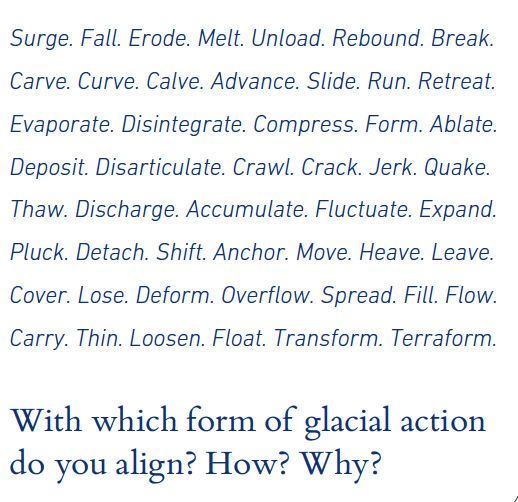
Exhibit Jökloreography is a deck of fifty flash cards featuring verbs that describe glacial movement. Any human who practices these movements may be exploring a subset of glacial vocabulary.
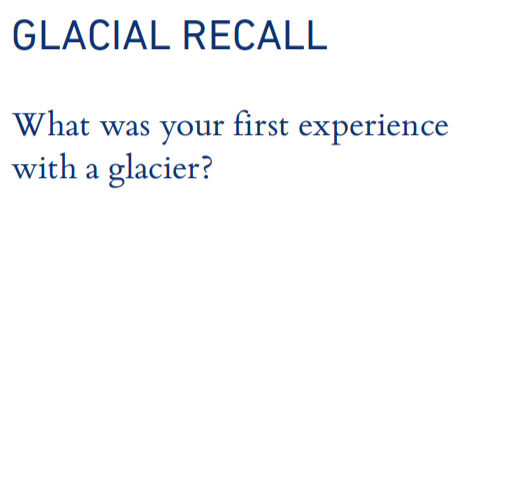
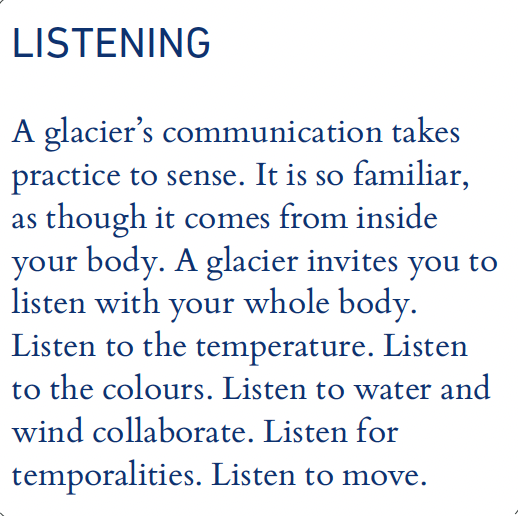
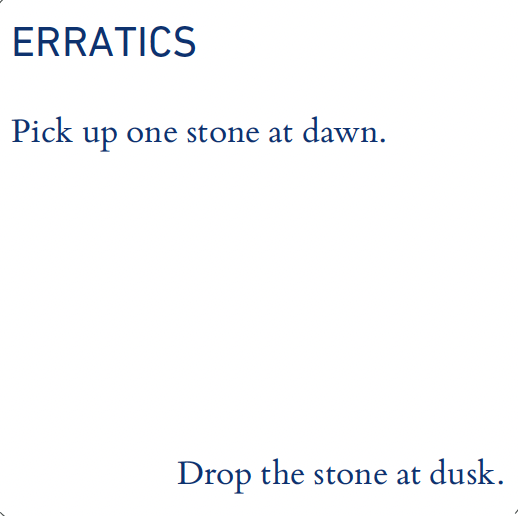
Exhibit Glacial Relations offers twenty-four performance scores designed to attune humans to their temporal and sensorial interdependence with glaciers.
Exhibit: Jökloreography


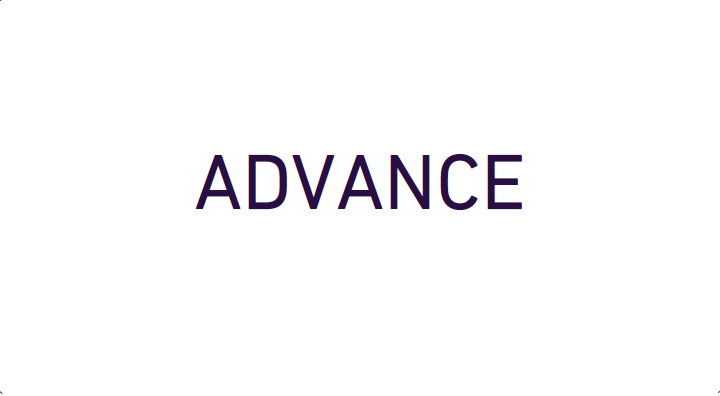

















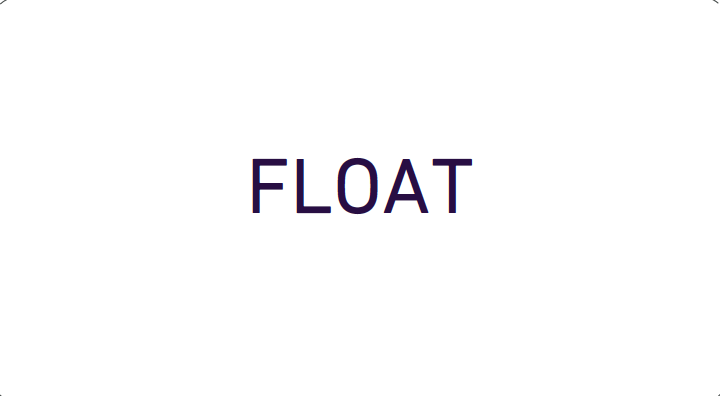






Exhibit: Glacial Relations








WHEREFORE, the Mover respectfully requests that this Deliberative Assembly grant the Motion to Chill. By passing this Motion, the Assembly will disseminate the knowledge that humans are glacial beings. Past, present, and future Jöklaþing members may form exploratory committees to consider formulation and implementation of Jöklaþing as well as ratifying jöklenska and other glacial languages as worthy of urgent protection and study.
Respectfully submitted,
DR. a Snæfellsjökuls rawlings
Mover
Action Requested
Endnotes
1 As the Mover loves in Iceland and has long-running interrelations with the glaciers, there is a reliance on Icelandic language and cultural heritage throughout this Motion. This in no way is intended to act as an endorsement for the concept or practice of a nation-state. That said, the Mover also co-founded the campaign Snæfellsjökul fyrir forseta (Snæfellsjökull for president), which nominated the glacier for the Icelandic presidency (Magnússon 2024; Kassam 2024; Meijer 2024; Balaguer 2024; Süddeutsche Zeitung 2024). So the Mover also acknowledges their active role in contributing to nation-state structures and rituals.
2 “Stop, collaborate, and listen (Vanilla Ice 1990).”
3 Typeset in Century Gothic Pro, a font that uses 30% less ink than similar fonts due to slender lines. Century Gothic Pro is recommended and used by many governments for legal documents.
4 ‘We’ as in any human who wishes to be included within this ‘we’. ‘We’ who relate. As in any human who is a we-body relating as an ecosystem within an ecosystem.
5 The Holocene epoch is the current interglacial period, lasting roughly 11,700 years to date.
6 “The 2025 PHC report concludes that seven out of nine Planetary Boundaries have been breached, with all of those seven showing trends of increasing pressure—suggesting further deterioration and destabilization of planetary health in the near future (Sakschewski et al. 2025).”
7 Withness is “the art of interdependent relationship (Rawlings 2024).”
8 Collective members of Snæfellsjökul fyrir forseta (Snæfellsjökull for president) approach glacial relations through an ethos of að jökla (to become-with glacier). “The neologism að jökla takes an Icelandic verb form and applies it to the word for glacier (jökull). This follows the behaviour of Icelandic seasonal verbs such as að vora (to become spring) and að vetra (to become winter), signaling metamorphic transition as their action. The glacier-verb neologism traces transition; in the case of current usage, it implies a flux in mass, leaning heavily towards transitional disappearance. The creation of this action word also allows for the empathetic embodiment of glacier experiences (Russo and Reed 2018).”
9 Even a response-ability (Haraway 2016).
10 “Obligations, duties, or responsibilities are possible without rights (Streeten 2000).” See further discussion of rights correlated with or replaced by obligations, duties, responsibilities (International Council on Human Rights Policy 1999), capabilities (Nussbaum 2004), reciprocities (Kimmerer 2024).
11 Geosemiotics denotes the communicative capacities of a plant or planet, transmitted through sensorial materialities.
12 Glaciers demonstrate their agencies through movement, performing an intricate dance with ecological partners.
13 See Schechner 2013.
14 At the start of the 21st century, there were 44 countries with glaciers. Venezuela officially became deglaciated in 2023 (International Year of Glaciers’ Preservation 2025). By 2100 with current and projected rates of warming, 50% to 80% of glaciers are predicted to disappear globally (Rounce et al. 2023; Bosson et al. 2023; Weston 2023; Zekollari et al. 2024).
15 We accumulate; we drink.
16 We secrete, excrete, discharge.
17 Be they glacier, human, river, ocean, weather, beaver, ancestor, another.
18 There are three hundred words in Icelandic that contain the word for glacier: jökull. With glaciologists predicting the complete disappearance of all Icelandic glaciers in the next 150-200 years, these words act as an archive of future loss (Rawlings 2014).
19 All human languages presented here are spoken in locations proximal to glaciers. This is but a sampling of such languages, all of which are undergoing rapid transformation of both their glacier signifieds and the affective, semantic relationship they have with their words for glacier.
20 See Exhibit Glacial Relations—specifically “Pronounce Glacier,” “Pronounce Gletscher,” and “Pronounce Jökull.”
21 Indigenous Ecological Knowledge, Traditional Ecological Knowledge, Local Ecological Knowledge.
22 Revised excerpt from Að Jökla: Ecolinguistic Activism through Acoustic Ecology, Countermapping, Travel Wreading, and Conversations with Landscapes (Rawlings 2014).
23 Þing is the Icelandic word for assembly and is applied to governance entities such as a parliament (in Icelandic: alþing).
24 The first open-air parliament (alþing) was established in Iceland amidst cliffs that emerged and now pull apart from the continuous upwelling mantle plume impacting separation of the Eurasian and North American tectonic plates. This cliff-valley is known as Þingvellir. Alþing meetings were founded from 930 to 1262 and were always held at Þingvellir, where deliberation and legislative pronouncements occurred at Lögberg (Icelandic for Law Rock).
25 The Room is intended to stand as an all-encompassing metonym for sites where political debates and decision-making conventionally occur in most contemporary societies. For additional context on my use of the Room, please see “How to Have a Conservation Conversation” (rawlings et al. 2014), an unperformable play which is staged both in the Room and in the Nature.
26 … which would imply all matters as humans are interdependent with more-than-humans. Therefore, a Jöklaþing would be appropriate as a term for all assemblies.
27 Exhibit (noun). (1) A document, photograph, object, animation, or other device formally introduced as evidence in a legal proceeding. (2) An attachment to a motion, contract, pleading, or other legal instrument. (3) An object or collection shown publicly, such as in a gallery.
28 As an example, Iceland might include jöklenska as a second official language of the country alongside Icelandic (íslenska).
29 Iceland has a robust language preservation practice within its legislation and history. Given that both íslenska and jöklenska are arguably threatened, Iceland would be a suitable country to implement comparable language preservation legislation for jöklenska immediately. This would support human residents of the country to learn jöklenska as a component of ecocultural heritage of necessity for glacial being, prior to the complete disappearance of all Icelandic glaciers in the next 150 to 200 years.
References
Balaguer, Carmina. 2024. ‘El glaciar de Islandia que quiso ser presidente del país’. Viajes National Geographic, July 4.
Bosson, J. B., M. Huss, S. Cauvy-Fraunié, et al. 2023. ‘Future Emergence of New Ecosystems Caused by Glacial Retreat’. Nature 620 (7974): 562–69.
Haraway, Donna J. 2016. Staying with the Trouble: Making Kin in the Chthulucene. Duke University Press.
International Council on Human Rights Policy, Ichrp. 1999. ‘Taking Duties Seriously: Individual Duties in International Human Rights Law’. SSRN Scholarly Paper No. 1551228. Social Science Research Network.
International Year of Glaciers’ Preservation. 2025. ‘Vanishing Glaciers’.
Kassam, Ashifa. 2024. ‘Bid to Secure Spot for Glacier in Icelandic Presidential Race Heats Up’. World News. The Guardian, April 19.
Magnússon, Pétur. 2024. ‘Safna undirskriftum fyrir forsetaframboð Snæfellsjökuls’. RÚV, April 10.
Meijer, Eva. 2024. ‘Laten we stemmen voor een gletsjer’. NRC, June 18.
Nussbaum, Martha C. 2004. ‘Beyond the Social Contract: Capabilities and Global Justice. An Olaf Palme Lecture, Delivered in Oxford on 19 June 2003’. Oxford Development Studies, ahead of print, March 1. World.
rawlings, a, Chris Turnbull, and Heather Hermant. 2014. o w n. CUE Books.
Rawlings, Angela. 2014. ‘Að Jökla: Ecolinguistic Activism through Acoustic Ecology, Countermapping, Travel Wreading, and Conversations with Landscapes’.
Rawlings, Angela. 2024. ‘To Listen Is to Relate Is to Sustain’. Þræðir 9 (May).
Rounce, David R., Regine Hock, Fabien Maussion, et al. 2023. ‘Global Glacier Change in the 21st Century: Every Increase in Temperature Matters’. Science, ahead of print, January 6. World.
Sakschewski, Boris, Caesar Levke, and Johan Rockström. 2025. Planetary Health Check 2025: A Scientific Assessment of the State of the Planet. Potsdam Institute for Climate Impact Research.
Schechner, Richard. 2013. Performance Studies: An Introduction. 3rd edn. Routledge.
Süddeutsche Zeitung. 2024. ‘Das Streiflicht’. March 19.
Vanilla Ice. 1990. Ice Ice Baby. To the Extreme. EMI Records, September 10.
Weston, Phoebe. 2023. ‘Half of Glaciers Will Be Gone by 2100 Even under Paris 1.5C Accord, Study Finds’. Environment. The Guardian, January 5.
Zekollari, Harry, Matthias Huss, Lilian Schuster, et al. 2024. ‘Twenty-First Century Global Glacier Evolution under CMIP6 Scenarios and the Role of Glacier-Specific Observations’. The Cryosphere 18 (11): 5045–66.